



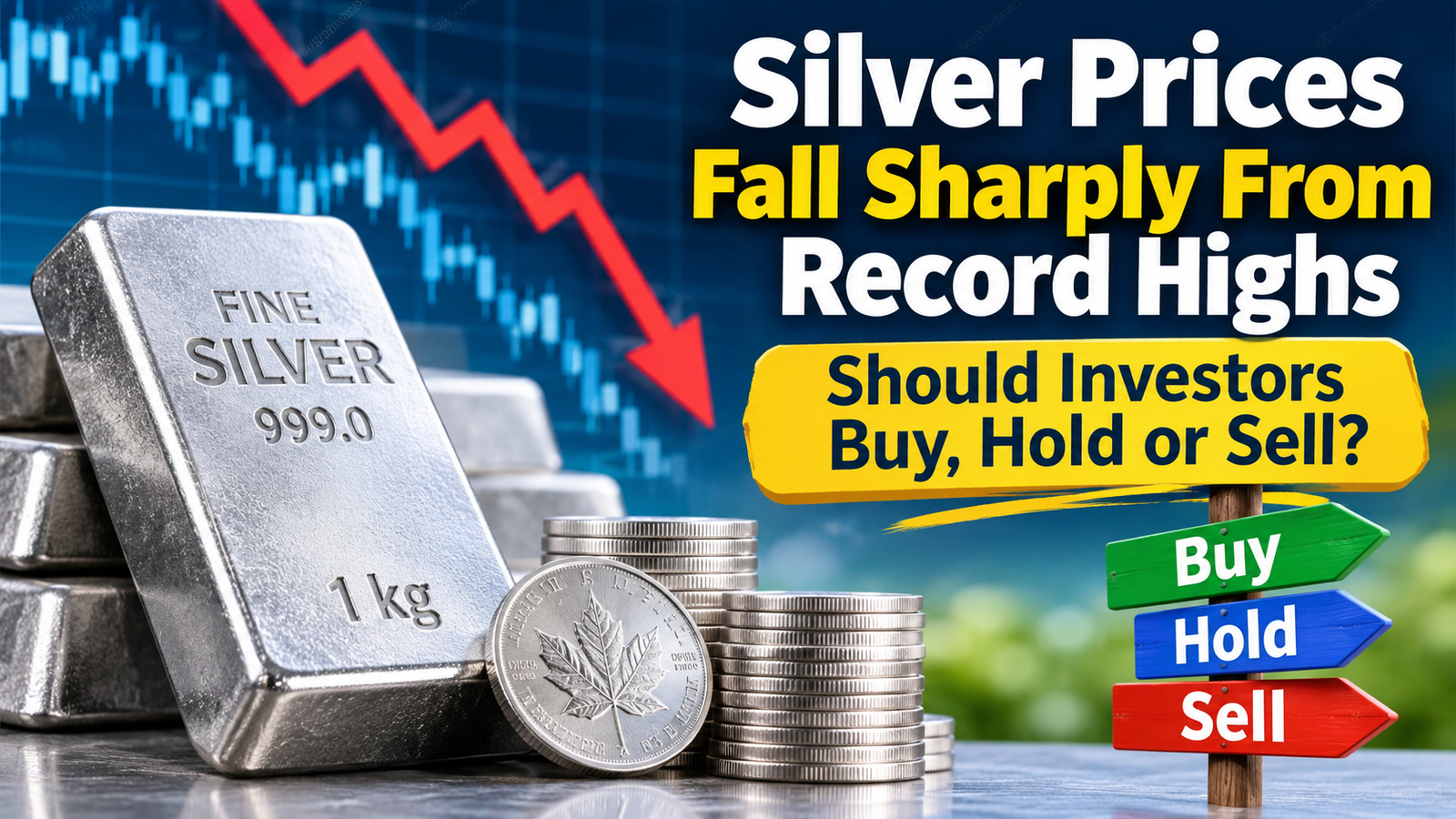
The sudden decline has worried investors who bought silver at higher prices and are now facing substantial losses. However, lower prices may also offer an opportunity for investors looking to add silver to their portfolios at more affordable levels.
According to The Economic Times, silver futures on the Multi Commodity Exchange of India (MCX) dropped from a record ₹3,84,632 per kg on January 29, 2026, to ₹1,90,847 per kg on October 27, 2026. This marks a fall of more than 50% from the peak. However, a significant price decline does not necessarily mean silver is now undervalued or a good buying opportunity.
Investors must therefore assess whether they should buy more silver, continue holding their existing investments, or reduce their exposure to the precious metal. So, in this Blog, we will explore the key reasons behind the fall in silver prices, the factors that could shape their future direction, and the points investors should consider before making investment decisions.
Why Have Silver Prices Fallen Sharply in 2026?
Several global economic developments and domestic factors have contributed to the significant decline in silver prices in 2026.
1. Rising US Interest Rates and Bond Yields
Unlike fixed deposits and bonds, silver does not provide regular interest income. When interest rates and bond yields rise, investors may prefer interest-bearing investments over precious metals.
Consequently, expectations of higher US interest rates can put downward pressure on silver prices by making it less attractive to hold the metal.
2. Strengthening of the US Dollar
Silver is traded internationally in US dollars. When the dollar strengthens, silver becomes more expensive for buyers using other currencies, which can reduce demand and put pressure on prices.
In India, currency fluctuations also affect domestic silver prices. Local prices depend on international rates, the rupee’s exchange rate against the dollar, import duties, and other domestic market factors.
3. Shifts in Industrial Demand
Silver is valued not only as a precious metal but also as an important raw material for industries. It is widely used in electronics, solar panels, automobiles, and various other applications.
According to the Silver Institute’s 2026 outlook, global industrial demand for silver used in manufacturing is expected to decline by 2% in 2026. One contributing factor is the reduced use of silver in solar photovoltaic applications, as manufacturers seek to use less silver or replace it with alternative materials.
Expectations of weaker industrial demand can weigh on silver prices. However, demand from other industrial sectors may help limit the decline.
4. Profit Booking Following a Record Rally
Silver prices surged before reaching their all-time high in January 2026. Following such a strong rally, some investors may choose to sell their holdings and lock in profits, especially when market conditions begin to change.
Profit booking, combined with leveraged trading and speculative activity, can intensify price fluctuations and lead to a sharper correction.
5. Changes in India’s Import Policies and Supply
India’s import policies, duties, and supply conditions also affect domestic silver prices. According to Reuters, India permitted imports of around 6,500 metric tonnes of silver over the following six months in October 2026. The decision was expected to ease domestic supply constraints and reduce local price premiums.
Changes in import rules, silver availability, and applicable duties can influence domestic prices and the gap between Indian and international silver rates.
Will Silver Prices Recover in the Future?
The future direction of silver prices will depend on several factors, such as interest rate movements, the strength of the US dollar, industrial consumption, investor sentiment, and global supply-demand conditions.
Factors That Could Drive a Recovery in Silver Prices
- Continued supply deficit: According to the Silver Institute, the global silver market is expected to record a supply deficit for the sixth consecutive year in 2026. This means overall demand is projected to remain higher than the combined supply from mining and recycling.
- Growing industrial usage: Increasing demand from electronics, automotive technologies and data-centre infrastructure could support silver consumption in the coming years.
- Rising investment demand: Economic uncertainty and geopolitical tensions may encourage investors to increase their allocation to precious metals, potentially supporting silver prices.
- Attractive prices after the correction: The sharp fall in silver prices could bring jewellery buyers and investors back into the market, particularly those who had postponed purchases when prices were significantly higher.
Factors That Could Prevent Silver Prices from Recovering
- Higher interest rates: Rising interest rates and bond yields could make interest-generating investments more attractive, reducing demand for silver.
- Stronger US dollar: Further appreciation of the US dollar could make silver more expensive for international buyers and weigh on global prices.
- Weak industrial consumption: Lower silver usage in solar panels, jewellery and other industrial applications could reduce demand and negatively affect market sentiment.
- Continued profit booking: Investors may continue to sell their holdings if prices remain volatile or fail to show signs of a sustained recovery.
Physical Silver vs Silver ETFs
| Factor | Physical Silver | Silver ETFs |
| Investment Type | Physical products such as silver coins and bars | Investment units traded on stock exchanges |
| Storage | Requires secure storage to protect against theft or loss | No need to store silver personally |
| Purity | Buyers need to check the metal’s purity and quality | The fund holds silver in accordance with its investment mandate |
| Additional Costs | May involve premiums, making charges and deductions when selling | May involve fund management fees, brokerage and other applicable charges |
| Liquidity | Depends on the product, prevailing prices and availability of buyers | Depends on trading volumes and market liquidity |
| Key Considerations | Purity, storage expenses and resale value | Market fluctuations, tracking error and trading costs |
What Should Investors Who Bought Silver at Record Highs Do?
- Avoid panic selling: Do not make an immediate decision solely because prices have fallen sharply.
- Reassess your financial goals: Determine whether you still have the time and financial capacity to remain invested.
- Review your silver allocation: Check whether your portfolio is overly dependent on silver prices.
- Be cautious about averaging down: Buying more at lower prices reduces the average purchase cost but increases your total exposure to the asset.
- Consider partial selling if necessary: If you need cash or your exposure is too high, reducing some of your holdings may be more appropriate than waiting indefinitely for a recovery.
Important Factors to Check Before Investing in Silver?
| Factors | Why It Matters |
| US Federal Reserve interest-rate decisions | Affect bond yields, the US dollar, and investor interest in precious metals. |
| US dollar and bond yields | Movements in these indicators can influence global silver prices and investment demand. |
| Industrial demand | Shows how silver consumption is changing across the solar, electronics and automotive industries. |
| Global silver supply | Helps investors understand the balance between silver production, recycling and overall demand. |
| Rupee-dollar exchange rate | Influences silver prices in India alongside international market rates. |
| India’s import duties and regulations | Changes in import policies and duties can affect domestic silver prices and local premiums. |
| Investment demand | Indicates whether investors are increasing or reducing their interest in silver as an investment. |
Silver Investment Strategy: Should You Buy, Hold or Sell?
Whether you should buy, hold, or sell silver depends on factors such as your purchase price, investment goals, time horizon, risk appetite, and the amount of silver you already hold in your portfolio.
1. Should You Invest More in Silver?
The recent fall in silver prices may create an opportunity for investors seeking long-term exposure to the metal. However, a price decline alone does not mean silver is available at a bargain.
Before investing more, consider these factors:
- Invest in stages: Spread your purchases over several instalments instead of investing the entire amount at once.
- Maintain a balanced portfolio: Avoid allocating too much of your investment portfolio to silver.
- Be prepared for volatility: Silver prices can fluctuate sharply, even when long-term demand prospects appear positive.
- Assess your investment horizon: Silver may not be suitable if you need access to your money in the short term.
- Choose the right investment option: Compare physical silver, silver ETFs, and other available investment avenues based on their costs, risks, and suitability.
2. Should You Hold Your Existing Silver Investments?
Investors who already hold silver should review their financial goals and the reasons they invested in the metal before deciding what to do next.
If silver is part of a diversified portfolio and the investor has a long-term investment horizon, continuing to hold may be a reasonable option, provided they are comfortable with the risk of further price declines.
However, investors should reconsider their holdings if their financial needs have changed or silver now makes up too much of their portfolio.
Before deciding to hold, consider these factors:
- Investment horizon: Assess whether you can stay invested despite short-term price fluctuations.
- Portfolio allocation: Check whether silver accounts for a larger share of your investments than intended.
- Financial needs: Consider whether you may need the money for upcoming expenses.
- Investment goals: Review whether silver still aligns with your original financial objectives.
Avoid holding silver only in the hope that its price will return to your purchase level. Your decision should reflect your current financial situation, investment goals and ability to handle risk.
3. Should You Sell Silver or Reduce Your Holdings?
Selling part of your silver investment may be worth considering if it no longer suits your financial goals or risk tolerance.
For instance, investors who need cash, have invested too heavily in silver or are uncomfortable with the possibility of further losses may consider reducing their exposure.
Before selling, review the following points:
- Financial goals: Determine whether you need the money to meet an upcoming expense or achieve a specific goal.
- Portfolio allocation: Check whether your silver holdings exceed your preferred investment limit.
- Selling costs: Account for applicable charges, premiums, and resale deductions, particularly when selling physical silver.
- Tax implications: Understand the tax rules that apply to any gains from your silver investment.
- Overall investment plan: Make sure the decision supports your broader financial strategy.
A fall in silver prices does not automatically mean you should sell. Similarly, expecting prices to recover is not, by itself, a good reason to continue holding an investment that no longer meets your needs.
Final Thoughts
The sharp decline in silver prices from their 2026 highs has created opportunities for new buyers but also raised concerns among existing investors. However, lower prices do not necessarily mean lower risk. Investors should review their financial goals, investment horizon, and portfolio allocation before deciding to buy, hold, or sell, as silver remains sensitive to interest rates, industrial demand, currency movements, and market sentiment.
Sources: msn.com