



In India, gold is much more than just a precious metal. It symbolises tradition, emotions, financial security, and social status, making it an integral part of Indian culture. From weddings and festivals to family celebrations, buying gold has always been considered a natural and important tradition in many households.
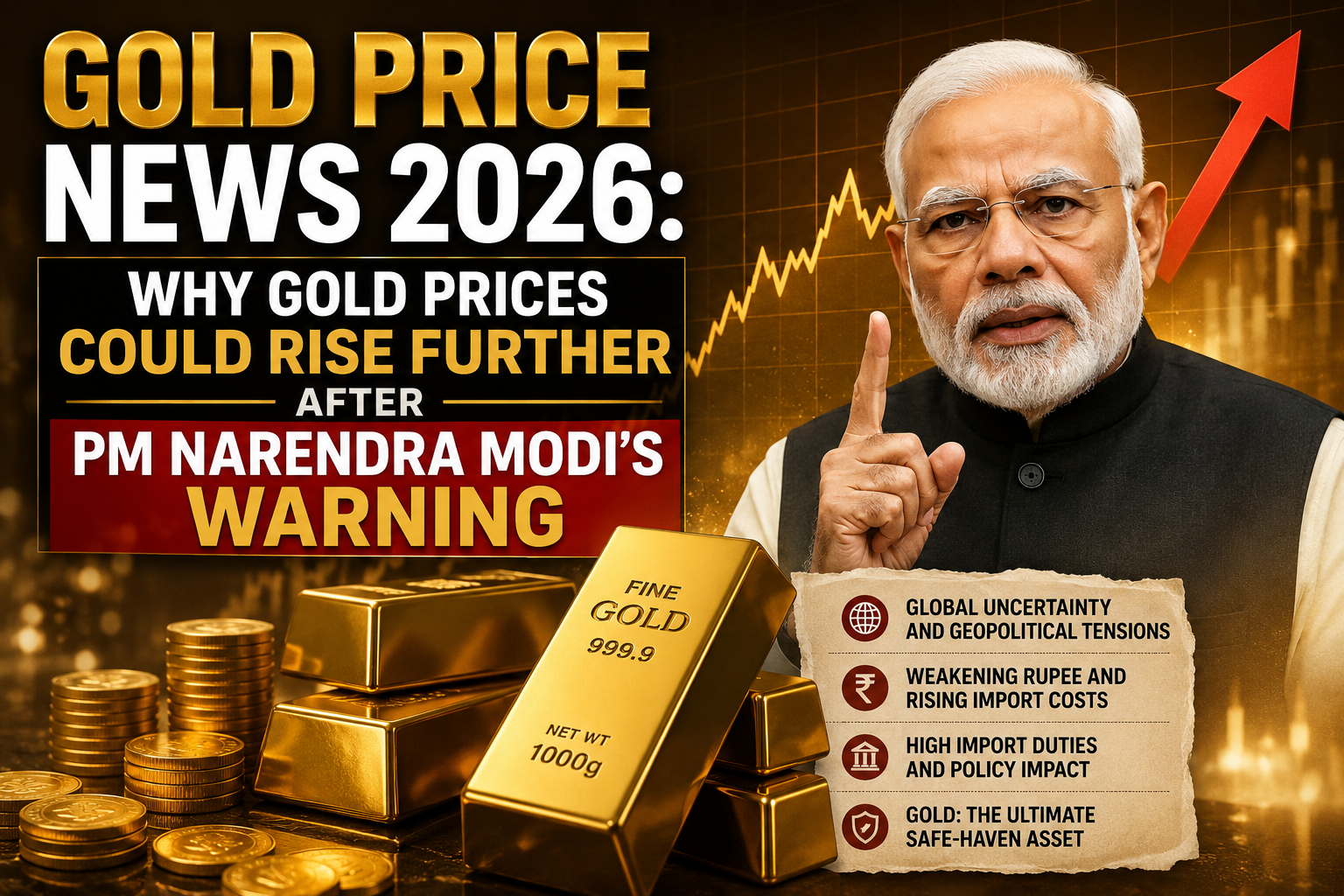
However, Prime Minister Narendra Modi’s recent appeal urging citizens to avoid unnecessary gold purchases for a year has sparked widespread debate across the country. His statement came at a time when global crude oil prices were rising, tensions in West Asia were escalating, and concerns over India’s foreign exchange reserves were increasing. Soon after this warning, the government raised the import duty on gold and silver from 6% to 15%, making these precious metals significantly more expensive for consumers.
Why is the government encouraging people to limit gold buying? And if demand for gold declines, how will it impact jewellers, households, and the broader economy? Beneath the sparkle of gold lies a deeper economic burden that many people fail to notice. Experts believe the issue goes far beyond simply rising jewellery prices.
Why Did Prime Minister Modi Urge Indians to Cut Down on Gold Purchases?
Speaking at a public event in Hyderabad, Prime Minister Narendra Modi encouraged citizens to reduce non-essential spending on imported items such as gold, overseas travel, and excessive fuel usage. His appeal came amid growing economic concerns caused by rising global oil prices and geopolitical tensions involving Iran and the Strait of Hormuz.
India relies heavily on imports to meet its gold demand, and these purchases are largely made using US dollars. A sharp rise in gold imports puts additional pressure on the country’s foreign exchange reserves. Reports suggest that India imported gold worth nearly $72 billion during FY 2025-26, making it one of the nation’s biggest import expenditures.
To curb rising imports and ease pressure on the economy, the government increased the effective customs duty on gold and silver from 6% to 15%, significantly raising their prices in the domestic market.
Why Gold Prices May Continue Rising?
1. Higher Import Duty Has Increased Domestic Gold Prices
One of the biggest reasons behind the recent surge in gold prices is the increase in import duty. Since India depends heavily on imported gold, any rise in customs duty directly raises the price of gold in the domestic market.
Following the duty hike, gold prices on the Multi-Commodity Exchange (MCX) reportedly witnessed a sharp rise, reflecting the increased cost of imports.
2. Global Uncertainty Is Driving Investors Toward Gold
Gold is considered a quite safe asset during times of geopolitical tensions and economic uncertainty. Ongoing conflicts and tensions in West Asia, along with concerns over disruptions in global energy supplies, are encouraging investors worldwide to move toward gold.
Even though the government is trying to reduce gold consumption, international demand may remain strong as investors continue using gold as protection against inflation, currency fluctuations, and financial market volatility.
3. Expensive Crude Oil May Push Inflation Higher
During global crises, crude oil and gold prices often rise together. If oil prices remain elevated for a long period, inflationary pressure could increase across major economies. In such situations, gold generally attracts more investors because it is widely viewed as a hedge against inflation.
As a result, global demand for gold may continue to stay strong, supporting higher prices.
4. A Weak Rupee Could Make Gold Even Costlier in India
Gold is traded globally in US dollars. If the Indian rupee weakens against the dollar due to rising import bills and pressure on foreign exchange reserves, gold automatically becomes more expensive for Indian consumers.
This means that even if international gold prices remain stable, retail gold prices in India could still rise due to currency depreciation.
5. India’s Cultural Connection With Gold Remains Strong
Experts believe that demand for gold in India is unlikely to decline sharply despite higher prices and government appeals. Weddings, festivals, and traditional savings habits continue to keep gold deeply rooted in Indian households.
Historically, Indians have continued purchasing gold during uncertain economic conditions because it is seen not only as an investment but also as a symbol of financial stability and long-term security.
Is India’s Gold Obsession Creating a Hidden Forex Burden?
Every time India imports gold, payments are made in foreign currency, mainly US dollars. This steadily increases pressure on the country’s foreign exchange reserves and widens the trade deficit. In simple terms, more money flows out of the country than comes in. Economists consider this imbalance a serious concern because it can weaken financial stability during periods of global uncertainty and economic stress.
Today, gold contributes to more than 9% of India’s total imports. While families continue buying gold for security and tradition, the economy faces rising financial pressure in the background. This hidden economic burden is one of the key reasons policymakers are now exploring ways to reduce dependence on imported gold without hurting public sentiment and cultural traditions.
What Analysts and Industry Experts Are Saying?
1. Several market experts believe that the government’s warning could affect gold demand in the short term. Buyers may become cautious for some time due to uncertainty in the market.
2. However, analysts do not expect gold to lose its long-term value or popularity among investors. Many still consider gold one of the safest investment options during economic uncertainty.
3. Some experts also believe that stricter government measures may actually strengthen gold’s reputation as a safe-haven asset. During periods of inflation, global tensions, or market volatility, investors often turn to gold for stability.
4. Industry observers say that gold continues to remain a preferred store of value despite temporary policy changes and price fluctuations.
5. At the same time, several industry bodies have raised concerns about higher import duties on gold. They warn that excessive taxes could increase unofficial imports and smuggling activities.
6. Experts note that similar situations were seen in the past when gold import duties were sharply increased, leading to a rise in illegal trade channels.
7. The All India Jewellers and Goldsmith Federation has suggested introducing a dedicated bullion banking system. The proposal aims to bring idle household gold back into the financial system through deposits, lending, and recycling. Experts believe this could help reduce annual gold imports by around 200–300 tonnes.
FAQs
Q1. Why Is PM Narendra Modi Asking Indians to Avoid Buying Gold?
Ans. Prime Minister Narendra Modi recently advised people to avoid purchasing gold for a year due to concerns over pressure on India’s foreign exchange reserves and the weakening rupee.
Q2. Why Have Gold Prices Increased?
Ans. Gold prices in India and across global markets have risen sharply due to multiple factors, including higher import duties, growing geopolitical tensions, strong buying by central banks, and the weakening of the Indian rupee.
Q3. Is the Indian Government Increasing Its Gold Reserves?
Ans. India is reportedly expanding its gold reserves, as gold currently makes up only around 3.7% of the country’s total reserve assets. If the government adds nearly 200 tonnes to its existing holdings of 358 tonnes, the share of gold reserves could rise to over 6%.
Q4. What is Today’s Gold Price in India?
Ans. Today’s gold price in India is around ₹15,800–₹16,200 per gram for 24K gold and ₹14,500–₹14,900 per gram for 22K gold. Gold rates may vary slightly across cities due to local taxes and jeweller charges.