



Purchasing a home is one of the most significant financial investments a person makes. Even though buyers usually focus on the location, price, and amenities, it is equally important to check the property’s legal documents. Overlooking this step can lead to ownership disputes, fraudulent transactions, legal complications, financial losses, or even the risk of buying a property with unauthorized construction.
Whether you’re buying a flat, an independent house, or a plot, carrying out thorough legal due diligence is essential. To protect homebuyers, the Government of India, state registration authorities, lending institutions, and the Real Estate (Regulation and Development) Act, 2016 (RERA) have introduced several measures that help verify a property’s legal status before the purchase is finalized.
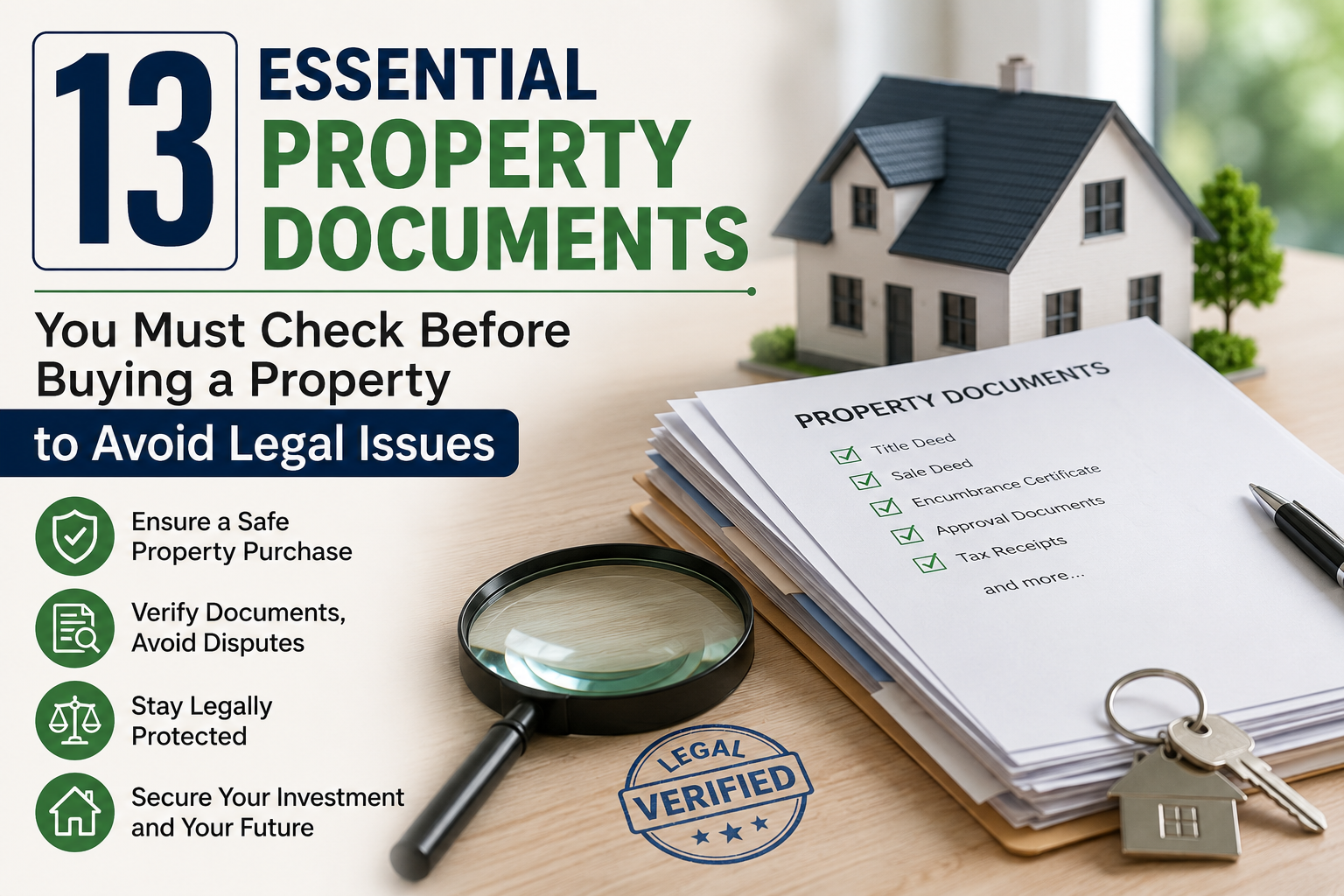
In this Blog, we cover 13 important property documents that every homebuyer should carefully verify before signing the sale agreement and completing the transaction.
Why Checking Property Documents Is Important
Verifying property documents before making a purchase is a crucial step that helps safeguard your investment and ensures the transaction is legally valid. Proper due diligence can protect you from fraud, ownership disputes, and unexpected legal or financial issues in the future. Here’s why it matters:
- Confirm the seller’s legal ownership: Ensure the seller has a valid legal title and the authority to sell the property, reducing the risk of fraudulent transactions.
- Ensure the property is free from legal disputes: Verify that the property is not involved in ongoing litigation, ownership conflicts, or claims that could create problems after the purchase.
- Verify government approvals: Check whether the property has received all the required approvals and permissions from the relevant authorities, including building plan sanctions and occupancy certificates, where applicable.
- Avoid buying encroached or unauthorized property: Reviewing the documents helps identify illegal constructions, encroachments, or deviations from approved plans that could lead to penalties or demolition.
- Get easier home loan approval: Banks check the property’s documents before approving a home loan.
- Prevent future financial and legal complications: Proper document verification minimizes the risk of unexpected expenses, legal battles, or ownership issues, ensuring a safer and more secure property investment.
13 Essential Property Documents Every Homebuyer Should Check Before Buying
1. Title Deed
This Deed is amongst the most important property documents because it proves who legally owns the property. It confirms whether the seller has the legal right to sell and transfer ownership to the buyer.
Before proceeding, ensure that:
- The name of the seller matches the official ownership records.
- The property can be sold without issues and with a clear legal title.
- The property has no ownership disputes or claims.
- The property description and boundaries match the actual property.
For added assurance, consider getting the Title Deed verified by a qualified property lawyer.
2. Sale Deed
The Sale Deed is the legal document that officially transfers ownership of the property from the seller to the buyer. It serves as legal proof of the property sale after it is signed and registered.
Check that:
- This Deed is registered with the local Sub-Registrar.
- The buyer’s and seller’s details are accurate.
- The property description matches official records.
- Applicable stamp duty and registration charges have been fully paid.
3. Mother Deed (Chain of Title)
The Mother Deed, also known as the Chain of Title, records the complete ownership history of the property. It helps establish whether every transfer of ownership has been carried out legally.
Verify that:
- The property’s ownership history is complete and has no interruptions.
- Each transfer has been legally executed.
- There are no gaps or errors in the property’s ownership history.
Banks generally examine this document before approving a home loan.
4. Encumbrance Certificate (EC)
An Encumbrance Certificate (EC) confirms whether the property is free from financial or legal liabilities. It shows the details of any registered property transactions.
Review the EC to check for:
- Existing home loans or mortgages.
- Court attachments.
- Financial liabilities or legal claims.
A Nil Encumbrance Certificate indicates that no registered encumbrances exist for the specified period. You can obtain the EC from the concerned Sub-Registrar’s office or the state’s online registration portal, where available.
5. Approved Building Plan
If you are buying a flat, apartment, or independent house, always ask for the approved building plan sanctioned by the local municipal or development authority. This confirms that the construction has been carried out legally.
Verify that:
- The building has received official approval.
- Construction complies with zoning regulations.
- The layout and floor plans adhere to local building by-laws.
Buying an unauthorized property may lead to penalties or even demolition.
6. Occupancy Certificate (OC)
The Occupancy Certificate (OC) is issued by the competent authority after confirming that the building has been constructed according to approved plans and is ready for occupation.
The certificate confirms that:
- The construction complies with sanctioned plans.
- Essential civic amenities have been provided.
- The building is safe and legally approved for occupancy.
Many banks and utility providers require an Occupancy Certificate before extending certain services.
7. Completion Certificate (CC)
A Completion Certificate (CC) certifies that the builder has completed the project in accordance with the approved building plans and applicable regulations.
Before buying, ensure that:
- The certificate has been issued by the local authority after inspection.
- The construction complies with approved specifications.
In many cases, obtaining an Occupancy Certificate is not possible without a valid Completion Certificate.
8. RERA Registration Certificate
Under the Real Estate (Regulation and Development) Act, 2016 (RERA), most residential and commercial projects must be registered with the respective State RERA Authority unless specifically exempted.
Verify the following details:
- Project registration number.
- Builder or developer information.
- Approved project plans.
- Scheduled completion date.
- Any disclosed litigation or project-related issues.
These details can be verified on the concerned State RERA portal.
9. Property Tax Receipts
Ask the seller for the latest property tax receipts to ensure that all municipal taxes have been paid.
The receipts help confirm that:
- Property taxes are up to date.
- There are no pending municipal dues.
- Local authority records are current.
Outstanding property taxes may become the responsibility of the new owner after purchase.
10. Khata Certificate / Mutation Certificate
Depending on the state, buyers should verify the Khata Certificate, Mutation Certificate, Record of Rights (RoR), or similar land revenue documents. These records establish the property’s legal entry in government records.
They help confirm:
- The property’s entry in municipal or land revenue records.
- The current owner’s details.
- Property identification for taxation and administrative purposes.
The applicable document varies from one state to another.
11. No Objection Certificates (NOCs)
Certain real estate projects require No Objection Certificates (NOCs) from various government departments before construction or occupation.
Depending on the property’s location and nature, verify approvals from authorities such as:
- Fire Department.
- Environmental authorities.
- Airport Authority (where applicable).
- Pollution Control Board.
- Water and sewerage departments.
- Electricity distribution authority.
The required NOCs differ based on local regulations and project specifications.
12. Possession Letter
A Possession Letter is issued by the builder to formally hand over physical possession of the property to the buyer. It records the date on which possession is transferred.
Ensure the letter includes:
- Possession date.
- Property details.
- Buyer’s name.
- Builder’s confirmation of handover.
This document is separate from the Sale Deed and the Occupancy Certificate and serves a different legal purpose.
13. Home Loan Closure Certificate (If Applicable)
If the property was previously financed through a home loan, ask the seller to provide documents confirming that the loan has been fully repaid.
These include:
- Loan Closure Certificate.
- No Due Certificate (NDC).
- Mortgage release documents, wherever applicable.
Also, verify through the latest Encumbrance Certificate that any registered mortgage has been officially removed from the property’s records.
FAQs
Q1. Which one is the most important document to check before purchasing a property?
Ans. The Title Deed is considered the most important property document. It confirms the seller’s legal ownership of the property and verifies that they have the legal authority to transfer ownership to the buyer.
Q2. How can I check whether a property is registered with RERA?
Ans. You can verify a property’s RERA registration by visiting the official website of the respective State RERA Authority.